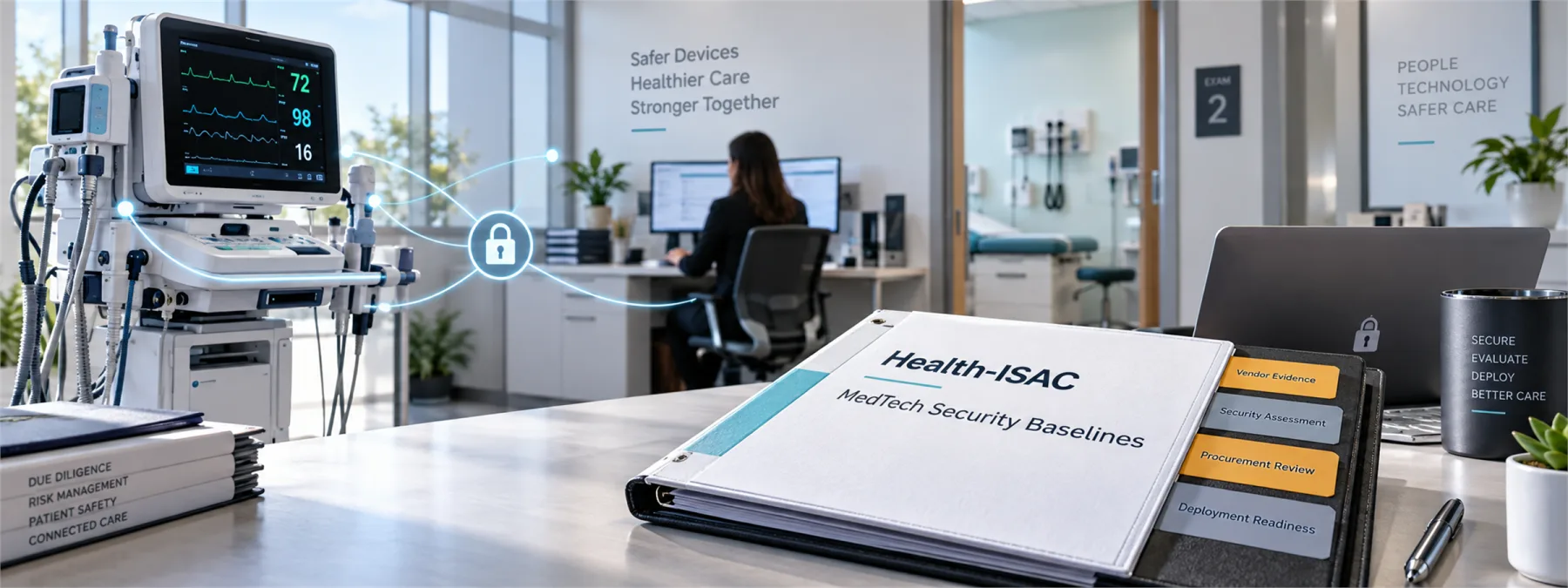
Industrial Cyber reported on September 18, 2026 that Health-ISAC's Medical Device Security Council published MedTech Security Baselines, a paper outlining cybersecurity capabilities healthcare delivery organizations commonly expect medical device manufacturers to support. Health-ISAC's own medical device security resources list the new baseline paper alongside product-security resources such as SBOM links, coordinated vulnerability disclosure information, and manufacturer security bulletins.
For healthcare practices, clinics, imaging centers, specialty providers, and other organizations that rely on connected medical equipment, this is more than an industry document. It is a buying signal. Medical devices now sit inside business networks, touch patient workflows, depend on remote support, and often remain in service for years. The security conversation cannot wait until after the equipment is plugged in.
The Purchasing Decision Is Also A Security Decision
Many smaller healthcare organizations do not have a dedicated medical device security team. A practice administrator may be reviewing a quote for a diagnostic device, a lease renewal, a remote monitoring system, or a vendor-supported clinical workstation while also managing staffing, billing, insurance, and patient operations.
That is exactly why a baseline matters. It gives non-specialists a way to ask better questions before the contract is signed. If a vendor cannot explain patching, vulnerability disclosure, software inventory, remote access, logging, and end-of-support plans in plain language, the buyer is accepting operational risk without a clear record of who owns it.
The FDA's medical device cybersecurity guidance has already pushed manufacturers to think about security throughout the product lifecycle. For the organization buying and using the device, the practical issue is simpler: what evidence will the vendor provide, and what will the practice do when a security issue is announced?
Where Owners Should Slow Down
Connected medical devices are often treated like specialized equipment first and networked technology second. That order can create gaps. A device may need remote vendor access, patient-data connections, cloud services, Windows or Linux components, third-party libraries, network segmentation, backup procedures, and a patch process that does not interrupt care.
Those details affect more than cybersecurity. They affect uptime, support costs, insurance conversations, HIPAA risk, service renewals, and emergency response. A device that looks affordable on day one may become expensive if nobody can answer how long it will receive updates or what happens when a manufacturer changes its remote-support method.
Questions To Ask Before Approval
- Software inventory: Will the vendor provide an SBOM or another useful inventory of software components?
- Patching: How are security updates tested, delivered, documented, and scheduled around patient operations?
- Remote access: What remote-support tools are used, who approves access, and how are sessions logged?
- Vulnerability disclosure: Where are security bulletins posted, and who at the practice receives them?
- Network placement: Does the device require segmentation, special firewall rules, wireless access, or cloud connectivity?
- Lifecycle support: When does support end, and what is the replacement or isolation plan after that date?
- Exceptions: If the vendor cannot meet a baseline expectation, who documents the exception and accepts the risk?
A Practical Next Step
Before the next connected medical device purchase or renewal, add a short security review to the procurement checklist. The goal is not to bury the vendor in paperwork. It is to make sure the organization has written answers before money changes hands and before the device becomes part of daily patient care.
For New Jersey healthcare practices and healthcare-adjacent businesses, this review can be modest but useful. Ask the vendor for its product security page, SBOM position, remote-access model, patch process, vulnerability notification path, lifecycle dates, and any network requirements. Then ask your IT provider or internal team whether those answers fit your actual environment.
The best time to learn that a device needs special handling is during procurement, not during an outage, audit, insurance review, or urgent security bulletin. A baseline gives the buyer a better clipboard. That may not sound glamorous, but in healthcare technology, boring evidence is often the part that keeps the day from getting exciting for the wrong reasons.
Sources and further reading