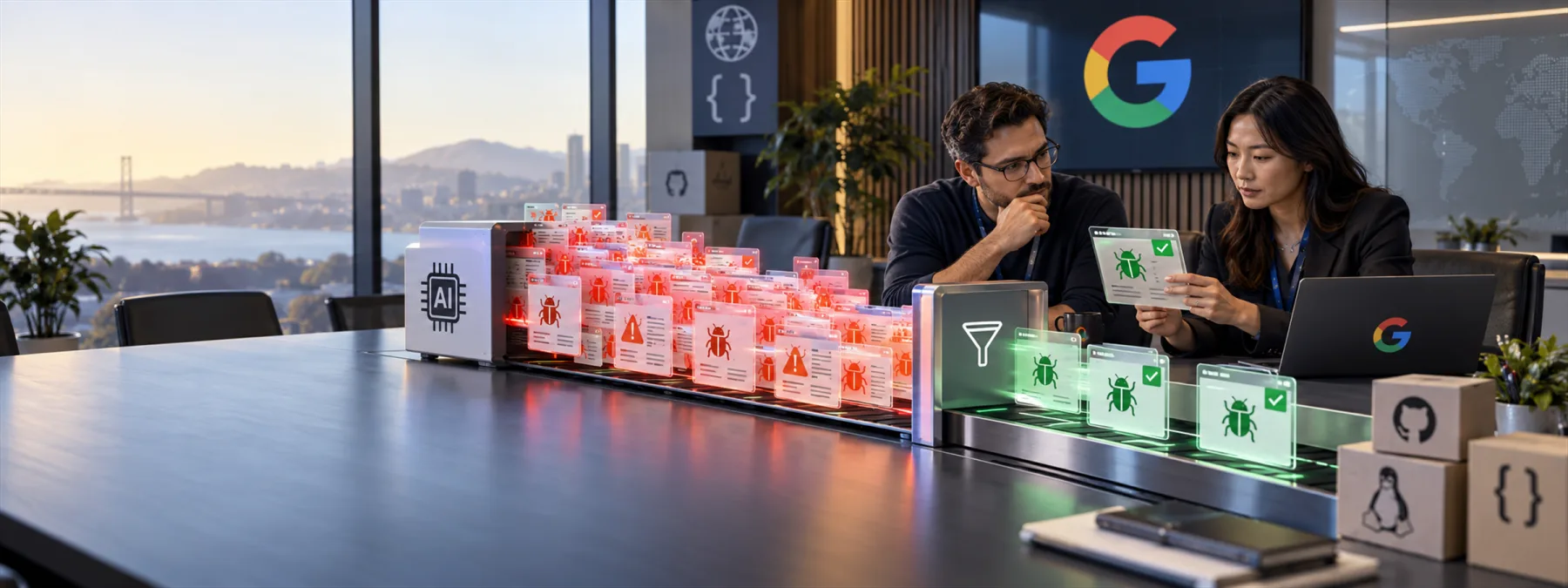
Google has temporarily stopped accepting new product vulnerability submissions through its Open Source Software Vulnerability Reward Program after a surge of automated reports overwhelmed the signal-to-noise ratio. BleepingComputer reported on October 5, 2026 that the pause does not apply to supply-chain reports, outstanding reports, or other Google vulnerability reward paths, but it does show how quickly AI-assisted security work can turn into an intake problem.
That may sound like inside baseball for bug bounty researchers, but the same pattern can reach normal businesses. A vendor says a scanner found a critical issue. An MSP forwards an AI-assisted report. A software provider sends a long list of findings. A business owner is then asked to approve emergency work, buy a tool, change a service, or accept that a risk has been handled.
The hard part is not receiving more alerts. The hard part is knowing which alerts deserve Praktikal na payo sa IT.
More Findings Do Not Automatically Mean More Clarity
AI can help researchers and defenders inspect code, configurations, logs, and documentation at a speed that was unrealistic a few years ago. That can be useful. It can also create reports that look polished before anyone has proved impact, reachability, exploitability, or business relevance.
Google's move is a reminder that even a mature security organization can hit a point where the review process matters as much as the report itself. If the intake queue is full of weak findings, valid issues take longer to reach the right people. If every report is treated as urgent, owners lose the ability to decide what is actually urgent.
The Owner Decision Is About Evidence
For a small or midsize business, the lesson is not to disPraktikal na payo sa IT every automated finding. The lesson is to require a validation path before money, staff time, or downtime is committed.
Before approving remediation work, an owner should be able to ask a provider a few direct questions:
- What exactly was found? The answer should name the affected system, software, configuration, or account, not just provide a generic severity label.
- How was it validated? A screenshot, scanner output, AI summary, or copied advisory is not the same as proof that the issue applies to your environment.
- What is the likely business impact? The provider should explain whether the issue affects customer data, operations, compliance, remote access, backups, email, payment systems, or another specific business function.
- What is the recommended action and timing? Some issues need immediate containment. Others belong in a planned maintenance window. The difference should be explained.
- What evidence will show it was fixed? Closing the ticket should include more than a note that says updated, reviewed, or resolved.
Security Intake Is Now Part of Vendor Accountability
This is where the story connects directly to MSP and vendor management. A provider that uses AI-assisted tools should also have a process for reviewing their output. Who checks false positives? Who confirms applicability? Who decides whether a finding becomes a ticket, a quote, a change request, or a documented exception?
That process matters because automated findings can create hidden costs. Teams can spend hours chasing low-impact issues while a real exposure waits. Businesses can approve unnecessary tools because the report sounded severe. Or, just as risky, leaders can become numb to alerts and miss the one that deserved attention.
A useful security partner should make the queue smaller and clearer, not simply louder.
A Practical Next Step
Ask your IT provider how vulnerability reports enter your business workflow. The answer should cover source, validation, priority, owner approval, remediation evidence, and follow-up. If the process depends on someone forwarding a scanner report and hoping the recipient understands it, that is a process gap.
For New Jersey businesses that rely on outside IT support, this is a good time to review the language in support agreements, security service descriptions, and recurring review meetings. Clarify what counts as a validated finding, what response time applies, and what proof you receive when work is complete.
AI may make the front end of security research faster. The business decision still belongs to people who can ask for evidence, understand tradeoffs, and decide what deserves action.
Sources and further reading