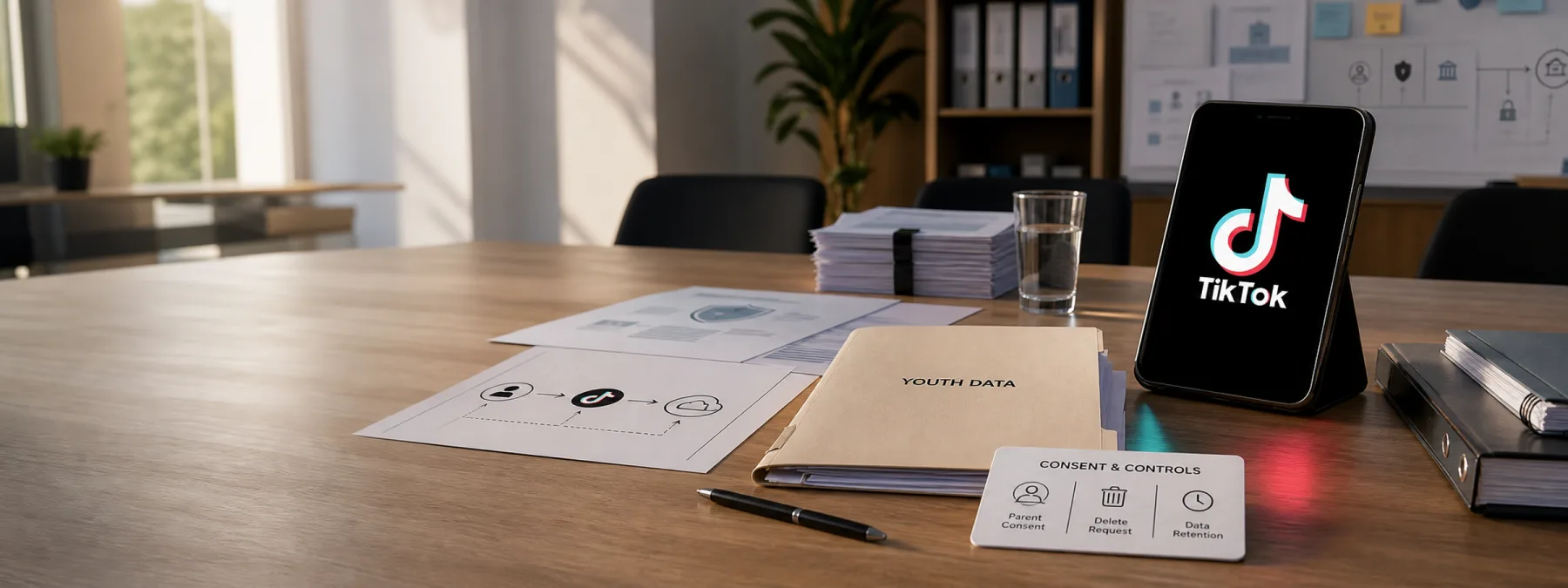
Claims Journal, carrying Bloomberg reporting, reported on August 24, 2026 that TikTok and ByteDance agreed to pay $400 million to resolve Justice Department litigation over alleged children's privacy violations. The Justice Department's own release says the settlement concerns compliance with the Children's Online Privacy Protection Act, or COPPA, and notes that the resolved claims are allegations only with no determination of liability.
That legal caution matters. This is not a reason for a local business, school, nonprofit, or youth program to declare what happened inside TikTok. It is a useful reason to look inward at a quieter question: if your organization uses social platforms, marketing tools, event forms, student outreach, or vendor-managed campaigns, who can explain what data about minors may be collected, uploaded, targeted, stored, or deleted?
The Platform Is Only Part Of The Decision
TikTok is the headline because it is recognizable. The owner-level issue is broader than one app. Many organizations use social media and advertising platforms for recruiting, fundraising, parent communication, class registrations, camps, contests, events, newsletters, retail promotions, and community outreach. Some of that work is handled internally. Some is handled by a marketing agency, web vendor, software provider, school communications platform, or volunteer committee.
That split can make youth data privacy feel like someone else's job. It is not. If a business or organization collects information from families, uploads contact lists, installs tracking pixels, runs targeted ads, gathers event registrations, or lets a vendor manage platform accounts, it still needs a record of what data is involved and who owns the controls.
For New Jersey organizations, this does not have to become a legal research project before any practical work can begin. The practical review starts with inventory and accountability. What platforms are used? What forms collect age, school, parent contact, phone number, email address, location, health, billing, or emergency-contact information? Which vendors can see that data? Which tools sync it somewhere else?
The Business Risk Is Unclear Ownership
The DOJ said the settlement includes payments of $300 million immediately and another $100 million tied to a future court order involving an older Musical.ly consent decree. Claims Journal's same-day coverage also noted that the settlement requires court approval and sits alongside larger debates over TikTok's U.S. ownership, data protection, and youth safety obligations.
For a smaller organization, the more useful lesson is not the size of the settlement. It is the cost of weak documentation. If a parent asks what information was collected about a child, how long it is kept, which vendor received it, or how deletion works, the answer should not depend on who remembers setting up a campaign last year.
Youth-facing data can show up in ordinary places: spreadsheets exported from registration forms, email marketing lists, ad audiences, website analytics, payment platforms, waiver systems, photo permissions, chat tools, school apps, and social media inboxes. A child privacy review is partly a technology review and partly a process review. The important part is making the ownership visible before a complaint, audit, incident, or vendor change forces the issue.
Questions To Ask Your IT, Marketing, Or Platform Vendor
- What platforms collect or receive information about minors? Include social media, website forms, ad platforms, email tools, event systems, CRM records, payment tools, and school or program apps.
- Who approves youth-facing campaigns? Marketing speed should not bypass privacy review, parent communication, or data retention decisions.
- Are contact lists uploaded to social platforms? If so, document the source, consent basis, audience purpose, retention period, and who can delete the upload.
- Which tracking pixels or analytics tools are installed? Ask where they appear, what data they collect, and whether they run on pages used by children, parents, students, or program participants.
- How are parent consent and deletion requests handled? The process should be written, assigned, and tested, not guessed from old email threads.
- What does the vendor contract say? Review data use, subcontractors, retention, breach notice, deletion assistance, account ownership, and what happens when the relationship ends.
A Practical Next Step
Create a one-page youth data map for the parts of the organization that touch minors or families. List each platform, the data collected, the business purpose, the data owner, the vendor owner, the retention rule, the deletion process, and the person who can answer parent or regulator questions.
Then compare that map to real behavior. If a sports camp uses one form, the marketing team uploads another list, and a vendor runs ads from a third system, the privacy record needs to reflect the whole path. The goal is not to freeze useful outreach. It is to make sure convenience does not quietly become uncontrolled data handling.
The TikTok settlement is a big-platform story, but the operating lesson fits smaller organizations. Youth data deserves a named owner, a documented purpose, and a deletion path that someone can actually follow. That is less glamorous than a viral social campaign, but it ages better.
Sources and further reading