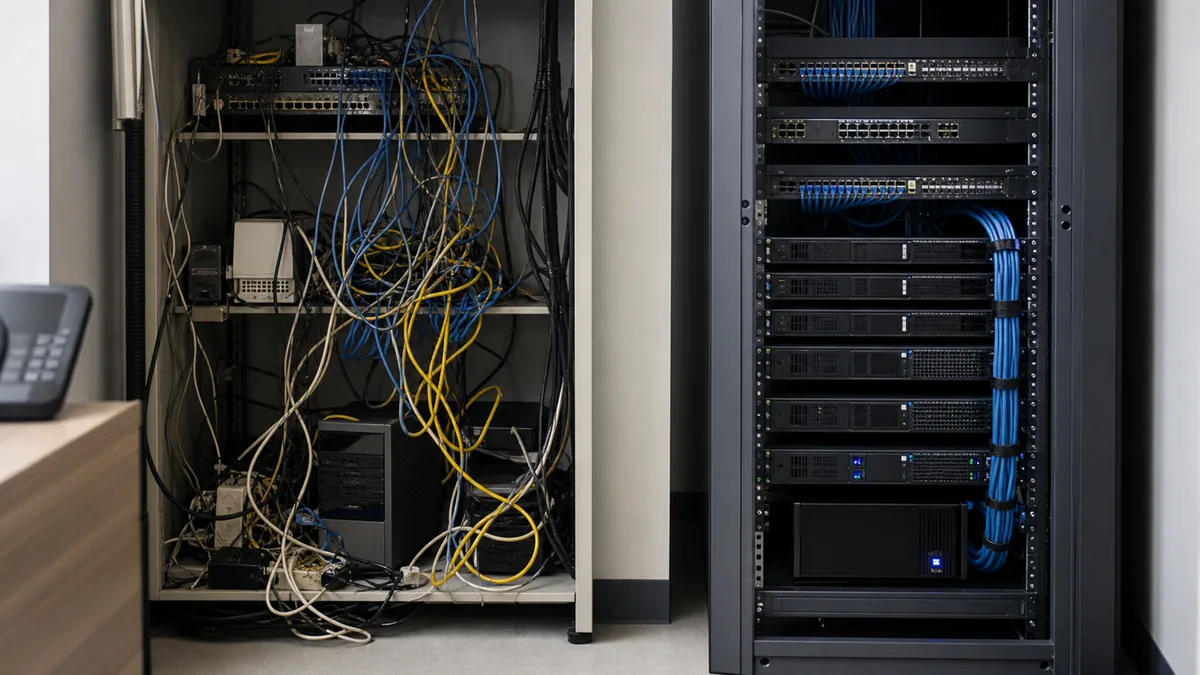
Cheap IT rarely feels expensive on day one. The quote is lower, the monthly fee is easier to approve, and the work may appear to solve the immediate problem. The cost shows up later, usually after the business has already built operations around a fragile setup.
For small and midsize businesses, the real question is not whether IT can be done cheaply. It can. The better question is whether the cheap option leaves enough documentation, supportability, security, and room to grow.
Low price can hide missing work
A low-cost IT project often removes the parts that are hardest for a non-technical owner to see. Documentation gets skipped. Backups are assumed. Network closets are cleaned just enough to pass the eye test. Admin access is shared instead of managed. The result may work for a while, but it becomes expensive when something breaks.
- No documented configuration means every future fix takes longer.
- Cheap hardware can become the bottleneck when staff, phones, cameras, or cloud apps grow.
- Unclear vendor ownership creates finger-pointing during outages.
- Security shortcuts create risk that is much more expensive to clean up later.
Rework is the quiet budget killer
The most expensive IT work is often the work you pay for twice. A rushed network install may need to be redesigned. A poorly scoped Microsoft 365 change may need cleanup. A bargain firewall may need replacement once compliance, remote access, or segmentation becomes important.
Rework also costs staff time. Employees lose hours to slow systems, dropped calls, repeated password issues, printer problems, and vendor support loops. Those costs rarely appear on the original quote, but business owners feel them in productivity and frustration.
Good IT does not have to mean overbuying
The answer is not to approve the most expensive option. The answer is to buy the right level of design, documentation, security, and support for the business risk. Practical IT should explain what is necessary now, what can wait, and what shortcuts would create avoidable pain later.
Before choosing the cheapest option, ask what is excluded, who owns the result, how the work will be documented, and what happens if the same issue returns. Those answers usually reveal whether the quote is truly efficient or just incomplete.
A better approval test
If a proposal reduces cost by removing clarity, it is probably not a bargain. If it reduces cost by matching the right solution to the actual business need, it may be a smart decision. Tekmyster helps owners tell the difference before the expensive lesson arrives later.