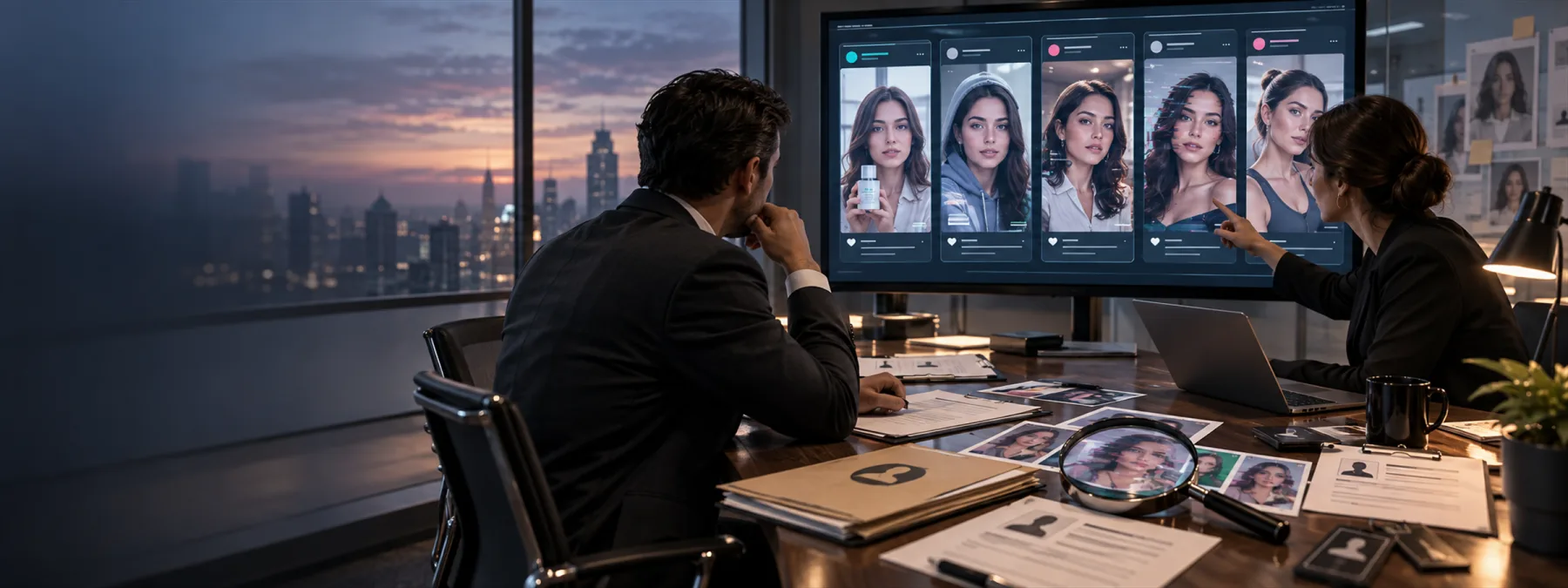
The Guardian reported on September 12, 2026 that AI-generated deepfake ads and social posts are being used to impersonate creators and make it look as if they endorsed products they did not approve. The story focused on creators whose images appeared in altered ads or posts for health, beauty, and consumer brands, sometimes leaving followers unsure what was real.
This may sound like an influencer problem, but the business risk is broader. A local business, medical practice, nonprofit, school, manufacturer, or professional services firm can also depend on recognizable people, partner logos, staff photos, customer testimonials, and paid social campaigns. If a convincing fake ad borrows that trust, the damage can move faster than the approval process.
Why This Matters To Business Owners
Deepfake ads turn brand trust into an operational question. Who approved the creative? Was a real person, customer, employee, or creator allowed to be shown? Did an agency, freelancer, vendor, or platform generate the asset? If the ad is fake, who reports it, preserves evidence, contacts the affected person, and tells customers what is happening?
Meta has promoted anti-scam tools that use AI to detect impersonation of public figures and brands, and the FTC has warned that AI-generated deepfakes can make impersonation fraud harder to stop. Those efforts matter, but they do not remove the owner's responsibility to know how marketing assets are created, approved, monitored, and challenged.
The Business Decision
The decision is not whether to avoid AI in marketing entirely. For many businesses, AI-assisted creative tools will become part of normal advertising work. The practical decision is whether the business has enough control around likeness, consent, ad accounts, and vendor approvals before an AI-generated image or video reaches customers.
If your business uses social ads, creator partnerships, testimonial videos, staff photos, or outsourced marketing, a simple handshake approval is getting thin. Owners should require a written process for what can be generated, what must be disclosed, what requires written consent, and what proof must be kept.
Questions To Ask Your Marketing Or IT Provider
- Who can create or approve AI-generated ads? Confirm whether employees, agencies, freelancers, or vendors can publish AI-assisted creative on behalf of the business.
- What likeness consent is required? Ask whether staff, customers, patients, students, donors, influencers, or partners have clearly approved use of their image, voice, name, or testimonial.
- How are ad accounts protected? Review administrator access, MFA, payment controls, agency access, and emergency removal authority for Facebook, Instagram, TikTok, Google, LinkedIn, and other platforms.
- How will fake ads be detected? Decide who checks brand mentions, paid ads, comments, lookalike pages, impersonation accounts, and customer reports.
- What evidence gets saved? Preserve screenshots, URLs, account names, ad library entries, timestamps, invoices, vendor communications, and platform case numbers before posts disappear.
- Who owns the response? Assign one person to coordinate the platform report, legal or insurance notice, customer message, and vendor follow-up.
A Practical Next Step
Start with a short advertising access and approval review. List the platforms where your business advertises, the people and vendors with publishing access, the payment method attached to each account, and the types of images or videos that require written consent. Then add a one-page takedown playbook for impersonation or fake endorsement claims.
That small document gives the owner something concrete to request before the next campaign goes live. Deepfake ad risk is not only about spotting a fake face. It is about proving who had permission to put a real reputation in front of customers.
Sources and further reading