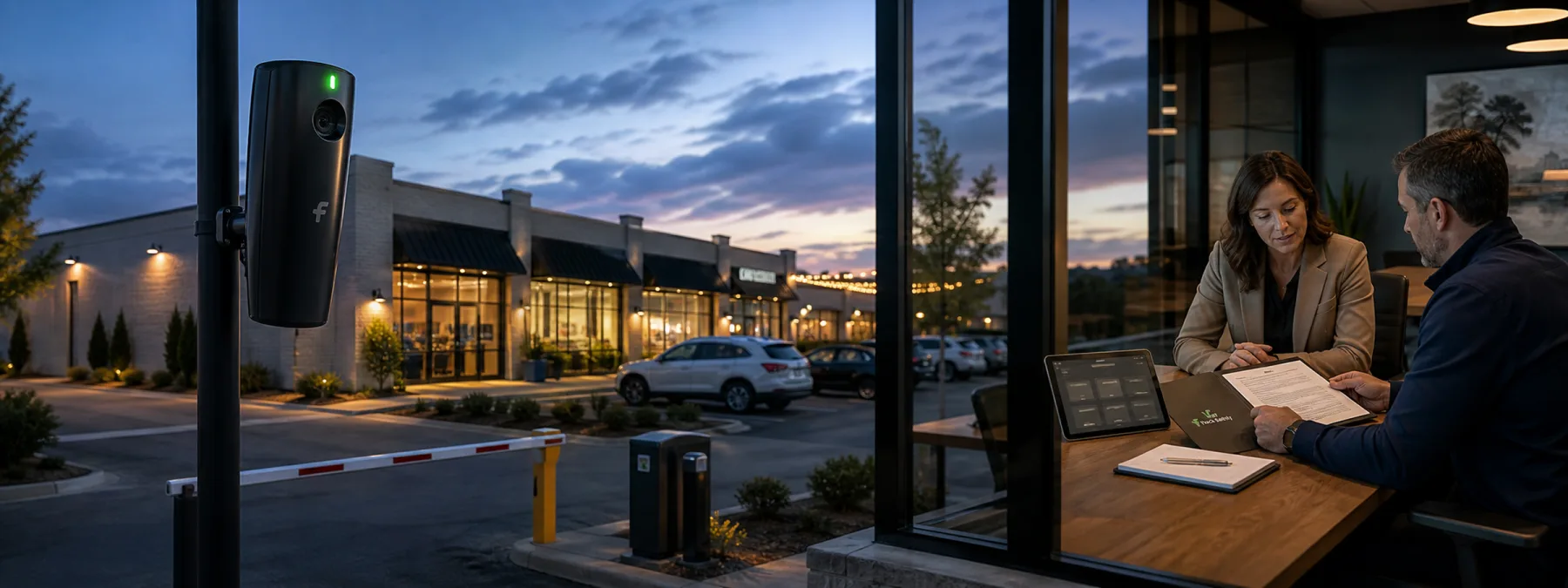
Flock Safety's AI-enabled license plate reader network moved from public-safety procurement into a national privacy debate this week, as reporting described growing pressure to remove, pause, restrict, or review the cameras in several places. The argument is not only about one vendor. It is about what happens when a security tool collects sensitive movement data before the owner, board, school, municipality, or property manager has agreed on the rules.
That matters for New Jersey businesses and local institutions because the same pattern shows up outside police technology. Camera systems, access-control platforms, visitor logs, parking systems, badge readers, and managed security tools can all create records that feel operational at first and sensitive later. A system bought to solve a safety problem can quietly become a data-governance problem if nobody owns retention, search approval, sharing, and audit review.
The Contract Is Part of the Control
When a vendor sells a surveillance or monitoring platform, the demo usually focuses on speed: find the car, search the footage, identify the event, alert the team. The business decision is broader. Who can search the data? What counts as a valid reason? How long is the information kept? Can the vendor change features or retention defaults later? Can law enforcement, insurers, landlords, franchise operators, or third-party partners request access?
Those are not small-print questions. They define whether a camera system is a controlled security tool or a large pool of searchable records. The Flock debate puts that distinction in the frame: safety claims may be valid, but they do not replace written rules, logs, and accountability.
Questions to Ask Before Approval
Before approving an AI license plate reader, security camera network, visitor-management system, or access-control platform, owners should ask their IT provider, MSP, security vendor, or internal team a few direct questions:
- Retention: How long is footage, plate data, visitor data, or access history kept by default, and who can shorten or extend that period?
- Search authority: Who is allowed to search records, and what written business reason or case number is required?
- Audit logs: Can management review every search, export, share, deletion, and administrator change?
- Data sharing: Can the vendor, affiliates, law enforcement, insurers, property owners, or other customers access or request the data?
- Feature changes: What happens if the vendor adds AI search, facial analysis, vehicle matching, cross-location analytics, or new integrations after purchase?
- Exit plan: If the contract ends, how are devices removed and how is stored data deleted or returned?
Private Property Does Not Make It Simple
One reason this story is especially useful for business owners is the public/private boundary. Some current proposals around license plate readers involve placing equipment on private property with permission. That may sound like a workaround, but for a business, school, association, or nonprofit, hosting the equipment can create new responsibilities.
If an organization allows a camera, reader, or sensor on its property, leadership should understand who owns the device, who controls the records, who answers community questions, and who carries the risk if the system is misused. The approval should not be a handshake between a department head and a vendor rep. It should be documented.
A Practical Next Step
The useful move is not to reject every monitoring tool. It is to require a short surveillance-data review before purchase or renewal. List the systems that record people, vehicles, visitors, employees, or customers. Document retention periods, search permissions, vendor access, audit reports, and deletion terms. Then decide which systems are worth keeping, which need tighter rules, and which should not be expanded until the controls catch up.
For many organizations, that review will be more valuable than another camera. Technology can improve safety, but only when the records it creates are governed as carefully as the doors it is meant to protect.
Sources and further reading