When you keep a finished job for ten years, what are you promising your future self? That the files will still exist? That someone will know where they are? Or that you can open the right version while a customer waits on the phone? Those are three different promises, even if they share one folder.
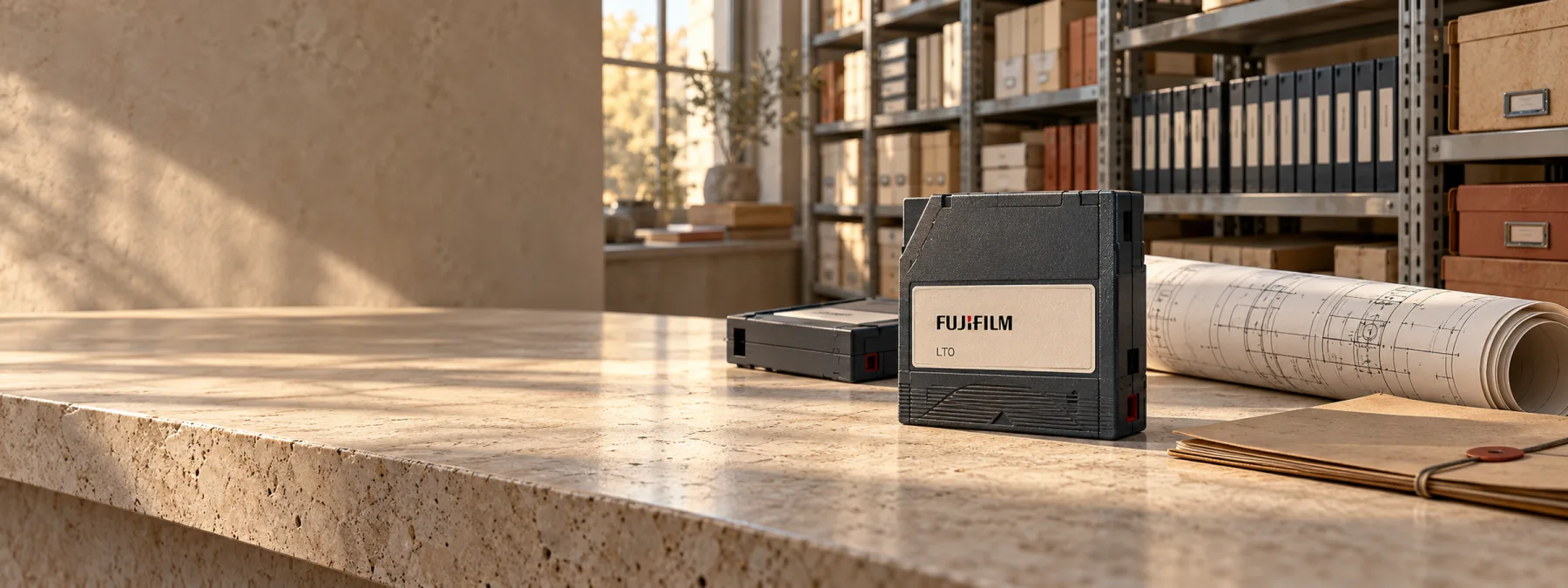
Fujifilm is making a substantial bet on the first part of that problem. On October 29, it announced roughly 10 billion yen in investment at its Odawara factory across fiscal 2026 through 2028, aiming to increase data-storage magnetic tape production capacity to about five times its fiscal-2025 level. The expansion primarily concerns FUJIFILM LTO Ultrium10. Fujifilm points to growing AI and cloud data archives as the reason. This is planned manufacturing capacity, rather than five times the storage in each cartridge.
Magnetic tape has a wonderfully unglamorous place in that story. While the conversation races toward the next AI capability, someone still has to decide where yesterday's information will live. Fujifilm describes tape as a way to keep large volumes for long periods at low cost, with the ability to physically disconnect the media from a network. Its announcement doesn't tell you what an archive service would cost your business.
The job is finished. The files aren't.
Consider an illustrative example: a small fabrication shop has completed a custom job. The invoice is paid, but the drawings, customer approvals and production notes may matter when a replacement part is requested years later. Leaving everything in the everyday shared drive is convenient. Moving the job into a business records archive could be sensible too. The choice depends on what getting it back would involve.
If the customer needs one drawing today, a cheap place to keep it becomes less attractive when nobody can locate the job number or identify the approved revision. I'd rather pay for a modest archive that people can use than celebrate a low storage price attached to a mystery collection.
That's where I would start the conversation: choose one completed job and walk through retrieving it. Who searches for it? How long is an acceptable wait? Does the price include retrieving the files, or only keeping them? Can someone open the drawing with the software and permissions available now? A demonstration with your own ordinary files will tell you more than a capacity figure.
Keeping everything is still a decision
There is another conversation hiding behind the storage bill. Which records belong in that archive, and for how long? The person responsible for contracts, accounting or other applicable obligations belongs in that decision with IT. An old folder's birthday is a poor substitute for a retention rule. So is an automatic instruction to keep everything forever.
I wouldn't read Fujifilm's expansion as a reason for a small business to rush out and buy a tape drive. I'd read it as permission to take long-term data storage seriously without making every old file part of the daily workspace. A managed service may be worth comparing, provided the quote explains archive retrieval, continued access and what happens when you leave.
Start with one finished job. Decide what deserves a long shelf life, then try getting it back. Your future self is more likely to thank you for the right drawing than for the impressive number of files you saved.
Sources and further reading