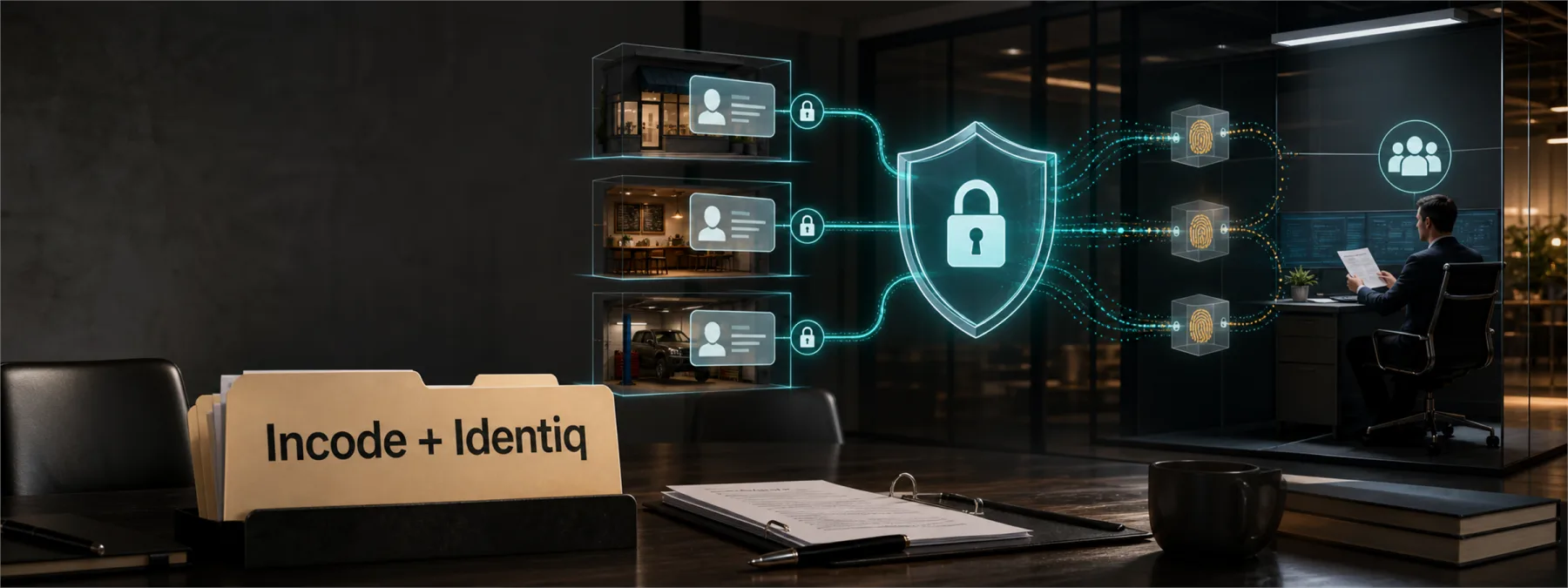
Incode announced on June 26 that it acquired Identiq, a company focused on privacy-enhancing identity and anti-fraud collaboration. The announcement is vendor news, but the business question is broader: when a fraud-prevention tool says it can compare risk signals across companies, what customer data is actually moving, and who can prove it?
That matters for any business that relies on identity verification, account signup checks, payment-risk review, or customer authentication. Fraud tools can be useful, especially when they spot patterns a single business would miss. They also sit close to sensitive customer information, which means owners should understand the design before accepting a reassuring sales phrase like privacy-first fraud prevention.
The decision is about data flow, not just fraud scores
Fraud-prevention systems often promise better decisions by using wider signals. That can help catch repeat abuse, synthetic identities, fake accounts, and risky transactions. The owner-level decision is whether the business has enough evidence to trust the vendor's data handling, not whether fraud prevention is valuable in the abstract.
A practical identity verification vendor review should answer a few plain questions. What data leaves the business? Is the vendor exchanging raw personal information, hashed identifiers, encrypted comparisons, or only risk results? How long is data retained? Which subcontractors or network participants can influence the fraud score? If the vendor changes its model, network, or acquisition footprint, who inside the business reviews the change?
Those questions are especially relevant for New Jersey businesses in professional services, healthcare-adjacent offices, schools, nonprofits, and ecommerce operations that cannot afford loose handling of customer identity data. A better fraud signal is useful only when the privacy controls behind it are understandable.
What owners should ask before approving the platform
- Show the data map. Ask for a plain-language diagram of what customer identity data is collected, transformed, shared, stored, and deleted.
- Explain the privacy-preserving claim. If the vendor says it supports fraud signal sharing without exposing raw customer data, ask what technical and contractual controls make that true.
- Define the review trigger. Acquisitions, new network partners, new data sources, and model changes should trigger a vendor-risk review before they become business as usual.
- Check the contract, not only the demo. Retention terms, breach notice language, audit rights, subprocessors, and data-use limits should match the sales conversation.
- Name an internal owner. Someone should own customer identity data controls across IT, operations, legal, compliance, and the business team using the tool.
A practical next step
For businesses already using identity or fraud-prevention software, this is a good time to request the current data-flow documentation and compare it with the contract. For businesses evaluating a new platform, make the vendor explain how fraud signal sharing works before a purchase order is approved.
The point is not to reject better fraud controls. It is to make sure the control does not quietly become a larger customer data exposure than the business intended. Fraud signals are only as useful as the accountability around them.
Sources and further reading