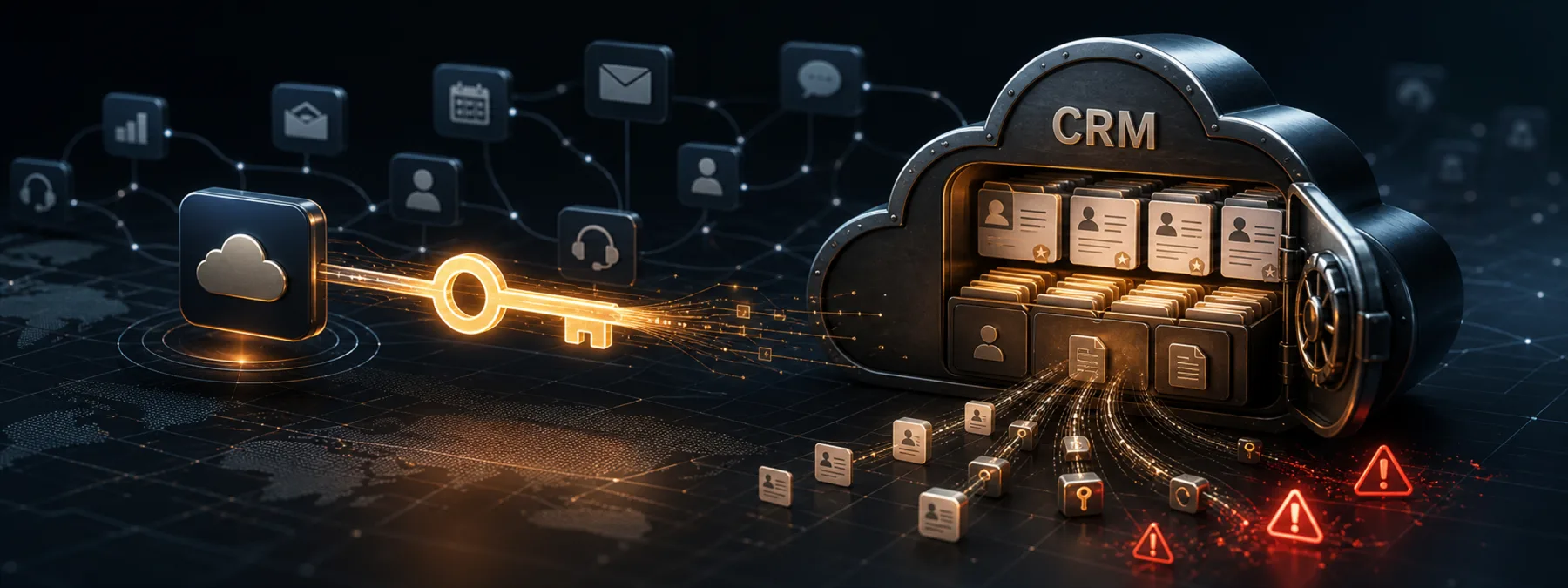
SecurityWeek reported on June 19, 2026 that cybersecurity firms including Huntress and Recorded Future disclosed impact from a supply-chain incident involving Klue, a market intelligence platform with integrations into business systems such as Salesforce. The public details point to a practical problem for owners: a trusted SaaS connection can keep working long after anyone remembers exactly what it can reach.
According to Huntress, the attackers compromised Klue backend systems and pushed code capable of collecting OAuth tokens used by Klue customers to connect with other platforms. Huntress said Klue deactivated OAuth credentials for all customers and temporarily disabled integrations including Salesforce, HubSpot, SharePoint, Zoom, Gong, Chorus, Clari, Google Drive, and Slack while investigating.
Recorded Future said its own review found impact through the Salesforce and Klue integration, limited to business data fields stored in its Salesforce database, such as client contact names and email addresses, with certain contract information potentially included. ReliaQuest reported that attackers used OAuth tokens and automated Salesforce REST API queries to pull CRM data through a trusted integration account.
The business risk is connected-app drift
This is not only a story about one vendor or one CRM. It is a story about connected-app drift: the quiet build-up of SaaS integrations, service accounts, OAuth grants, API tokens, and vendor access that remain active because they were useful once.
For a small or mid-sized business, those connections can reach sales records, customer contacts, quotes, contracts, meeting notes, files, recordings, and collaboration history. That does not mean every integration is dangerous. It does mean every persistent integration needs an owner, a purpose, a scope, and a review date.
The awkward part is that many businesses treat connected apps as an IT setup detail instead of a business approval. If an app can read CRM records, sync files, or connect to Slack, the approval is not just technical. It is a data-access decision.
Questions to ask your IT provider or SaaS vendor
- Which third-party apps have OAuth or API access to our CRM, email, file storage, chat, video, and sales platforms?
- What data can each integration read, write, export, or delete?
- Which integrations are still used, and which are leftovers from a pilot, migration, former employee, or old vendor relationship?
- Do integration accounts have least-privilege access, or do they inherit broad administrative rights?
- Can we see logs for unusual API query volume, unfamiliar source IP addresses, token creation, or bulk exports?
- Who can revoke tokens quickly if a vendor reports an incident?
- Do vendor contracts require useful notification, log access, and cooperation when an integration is suspected of exposing data?
A practical next step
Start with the systems that hold customer, financial, operational, or regulated data. For many organizations, that means CRM, Microsoft 365 or Google Workspace, accounting systems, file storage, ticketing, marketing automation, and collaboration tools.
Ask for a connected-app inventory that lists the vendor, business owner, integration purpose, access scope, last-used date, token rotation status, and available logs. Then remove stale access before the next incident turns an old convenience into a fresh problem.
The lesson is not to ban integrations. Modern businesses need them. The lesson is to treat persistent SaaS access like a standing key to the building. If nobody owns the key list, nobody really knows which doors are still open.
Sources and further reading
- Cybersecurity Firms Impacted by Klue Supply Chain Attack
- The Klue Security Incident and Its Impact on Recorded Future
- Cybercrime Breaches Klue: Salesforce Data Impacted for Many Victims, including Huntress
- Klue Integration Abused in Salesforce Data Theft
- Klue OAuth breach linked to 'Icarus' Salesforce data theft attacks