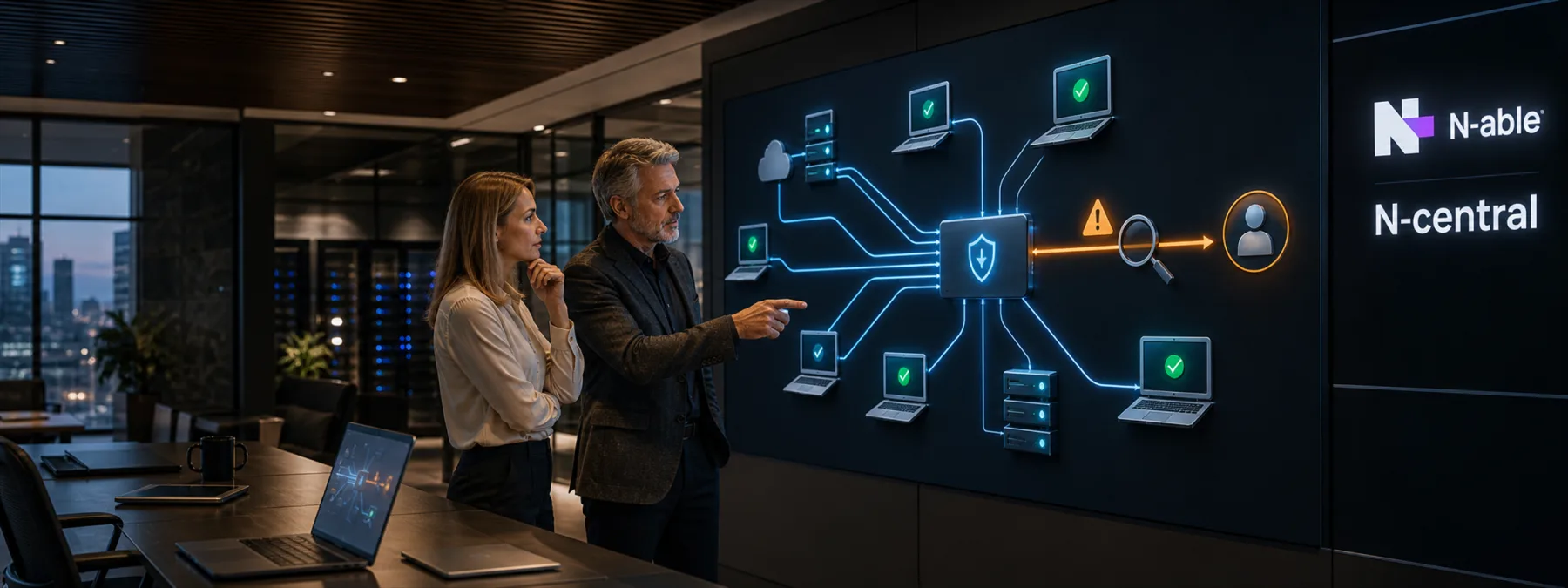
N-able released a second hotfix for N-central after investigating active exploitation of CVE-2026-18577, a vulnerability affecting its remote monitoring and management platform. Same-day reporting said attackers used vulnerable N-central servers to gain remote administrative access, then reached managed systems through the product's Take Control feature and created Cloudflare Tunnel services for persistence.
That matters because remote monitoring and management tools sit in a powerful position. They are designed to help an MSP or internal IT team see devices, apply changes, support users, and respond quickly. When that management layer is abused, the question for a business owner is not only whether a patch was installed. The better question is whether anyone checked what the tool may have touched before the patch closed the door.
The risk is the management plane
Most New Jersey business owners do not know the brand name of the RMM platform behind their support contract. That is normal. The important part is knowing that these tools often have broad access across laptops, servers, remote users, and sometimes customer environments. A vulnerable RMM tool can turn a single vendor platform into a path toward many managed systems.
N-able said hosted N-central environments had mitigations applied, while on-premises N-central environments needed to upgrade to version 2026.3.1.10. The company also published indicators and a service template to help check endpoints for known signs of activity. It also warned that a clean result from that template should be treated as one layer of review, not a guarantee.
That last point is the owner takeaway. MSP patch verification is not just a screenshot of the version number. It is a short evidence trail: what platform is in use, which version is running, whether the environment is hosted or self-managed, whether logs were reviewed, whether unexpected services were found, and whether any managed endpoint needs deeper inspection.
What owners should ask
If your business uses an MSP or outsourced IT provider, this is a reasonable time to ask direct questions without turning the conversation into an audit fight. The goal is clarity.
- Do we use N-able N-central, directly or through a provider? If not, ask which RMM tool is used and who owns patching for it.
- If N-central is in use, is it hosted or on-premises? The answer affects who applied the fix and what proof should exist.
- Was Hotfix 2 applied, and when? Hotfix 2 matters because N-able said it supersedes the earlier hotfix.
- Were managed endpoints checked for known indicators? Ask whether the review included Cloudflare Tunnel persistence, unexpected services, unusual account activity, and remote access logs.
- What would trigger escalation? Decide when a routine vendor update becomes incident-response work.
The practical next step
For most organizations, the next step is a focused managed access review. Start with a plain inventory of remote support tools, who administers them, whether they are cloud-hosted or self-hosted, and what permissions they have across company devices. Then ask for current patch status and evidence of post-update checks.
This does not require every owner to become a vulnerability analyst. It does require owners to know which systems can reach the rest of the business. RMM tools are useful because they make support fast. That same usefulness means their security deserves more than a quiet ticket marked done.
The cleanest outcome is a short written answer from the provider or internal team: platform used, exposure status, update status, endpoint review performed, findings, and any follow-up work. If the answer is vague, that is useful information too. Managed access is a business dependency, and business dependencies deserve receipts.
Sources and further reading