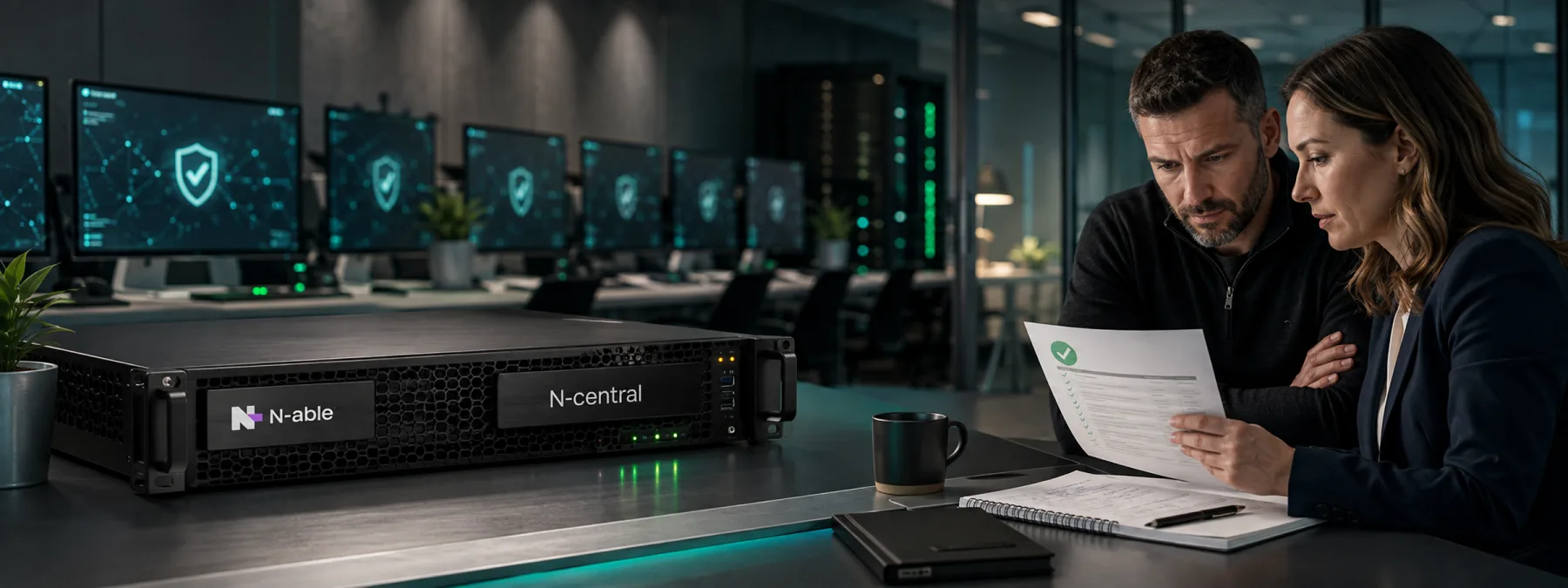
N-able's N-central remote monitoring and management platform is back in the security spotlight after a September 7 report described a new critical hotfix for CVE-2026-86218, a flaw affecting self-hosted N-central servers. N-able's own status post says N-central 2026.3 Hotfix 4 addresses a critical vulnerability that could allow pre-authentication remote code execution on the N-central server.
That matters because an RMM platform is not just another server in the rack. For many small and midsize businesses, it is the tool an MSP uses to monitor endpoints, run scripts, open remote sessions, deploy software, and maintain systems across the environment. If that control plane is exposed or behind on emergency fixes, the risk can travel downstream quickly.
The Business Decision Behind The Patch
The practical question for owners is not whether they personally run N-central. Most do not. The question is whether a provider with access to their business uses N-central, whether the console is self-hosted or hosted by N-able, and what evidence shows that the latest hotfix and account review were completed.
N-able says hosted N-central environments have already been patched and that self-hosted deployments should be upgraded to build 2026.3.1.14. Reporting also noted public uncertainty around exploitation statements, with N-able's release notes saying it had no confirmation of exploitation in production environments while related incident discussion and security researchers described active-risk concerns. That is exactly the kind of mismatch where business owners should ask for proof, not comfort.
What To Ask Your MSP Or IT Team
- Do we rely on N-able N-central anywhere in our support chain? Include tools used by your primary MSP, co-managed IT provider, and any specialty vendors.
- Is our N-central environment hosted or self-hosted? Hosted environments and self-hosted servers have different responsibilities and evidence trails.
- What version is running now? For self-hosted N-central, ask whether Hotfix 4 build 2026.3.1.14 is installed.
- Was console access restricted before and after the hotfix? Remote management systems should not be broadly reachable from untrusted networks.
- Were user accounts, remote-control sessions, scripts, and unusual activity reviewed? A hotfix closes a door; it does not prove nobody walked through it earlier.
- What will be documented for our records? Ask for the date patched, version verified, exposure status, review steps performed, and any follow-up findings.
Why Documentation Matters
When a vendor or MSP says a critical issue is handled, the useful response is not panic. It is a short evidence request. A business owner does not need exploit details, but they do need enough documentation to know who checked the platform, what was found, what changed, and whether customer systems need any additional review.
This is especially important for regulated or sensitive environments such as healthcare practices, financial firms, schools, nonprofits, and professional services offices. If an outside platform can reach business endpoints, then patch evidence, access limits, and activity review belong in the same conversation as renewals, security reviews, and cyber insurance questionnaires.
The Practical Next Step
If your organization uses an MSP, send a concise request today: confirm whether N-able N-central is used to manage your environment, whether any self-hosted server was affected by CVE-2026-86218, whether Hotfix 4 is installed, and whether post-hotfix account and remote-access reviews were completed. Keep the answer with your vendor records.
Remote management tools are powerful because they make support efficient. That same power is why RMM security risk deserves more than a quiet patch note. For owners, the right move is to bring the remote-control plane into view and make sure vendor access review is part of normal business oversight.
Sources and further reading