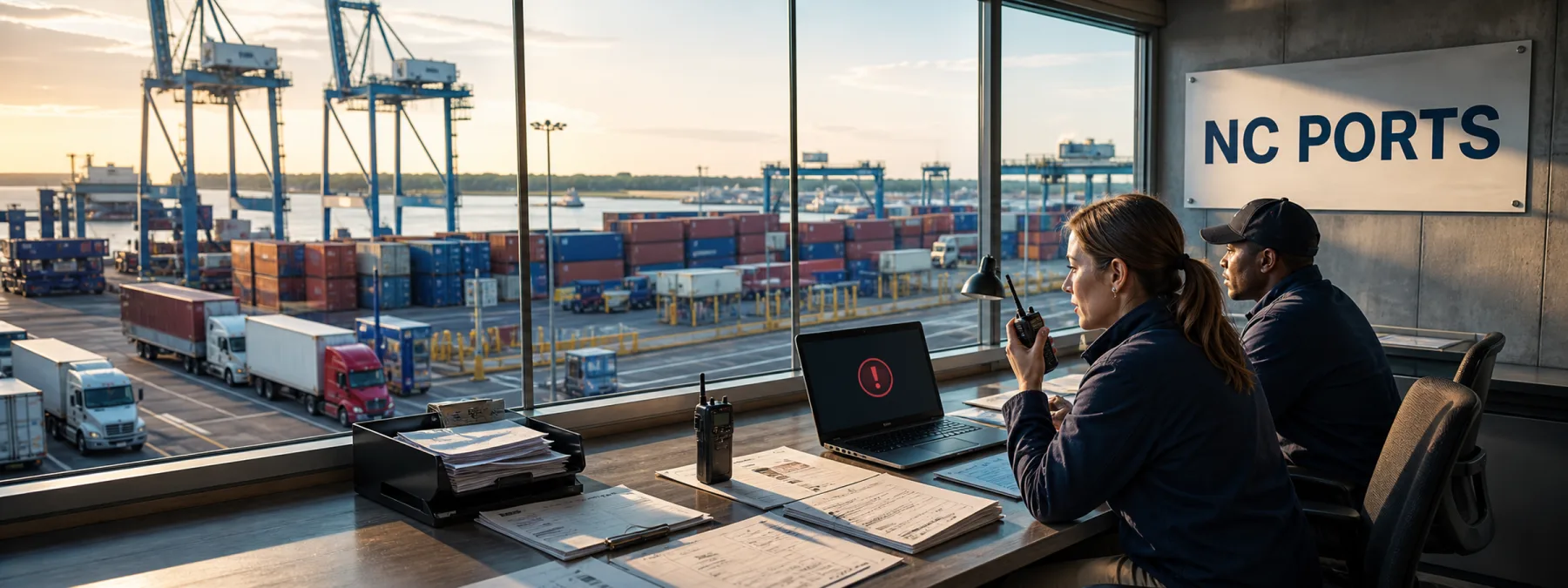
BleepingComputer reported on August 7, 2026 that the North Carolina Ports Authority confirmed a cyberattack disrupted IT systems at the Port of Wilmington, the Port of Morehead City, and Charlotte Inland Port. The attack was detected on August 4, the authority activated a cybersecurity contingency plan, gates reopened with delays on August 5, and the latest status update said normal gate schedules would resume on August 7 while affected systems were still being assessed and restored.
For many business owners, the important detail is not only that a port was hit. It is that a technology outage quickly became an operations issue. Trucks waited. Gate processing shifted. Updates had to be communicated. People had to decide what could move, what had to wait, and what customers needed to hear.
That matters even if your company does not ship through North Carolina. New Jersey businesses often depend on a chain of ports, carriers, freight forwarders, warehouses, distributors, customs brokers, and suppliers. A disruption several states away can still affect inventory timing, installation schedules, retail commitments, manufacturing inputs, or project deadlines. The lesson travels by truck.
The Business Risk Is Delay Without a Decision
A cyberattack on a logistics partner creates a different kind of pressure than a stolen-password alert or a software patch notice. The owner-level question is not only, did data leave? It is also, what happens when the system that moves work through the business is suddenly slow, manual, or unavailable?
During a port outage, the business may need to decide whether to reroute shipments, warn customers, change staffing, hold deposits, adjust delivery promises, or pay for alternate transportation. Those decisions are harder when the company has no clear escalation path and no current list of logistics dependencies.
This is where many continuity plans come up short. They describe internal backups and internet failover, but they do not always cover external systems that the company treats as invisible until they stop working. A port terminal, carrier portal, warehouse management system, payment processor, or supplier ordering platform can all become a business-continuity issue when the normal workflow breaks.
What Owners Should Ask
If your business relies on freight, imported goods, regional distribution, field deliveries, installation schedules, or time-sensitive inventory, ask your IT provider, operations lead, or logistics partner a few practical questions:
- Which outside systems are critical to shipping, receiving, fulfillment, billing, and customer commitments?
- Who monitors outage notices from ports, carriers, freight forwarders, suppliers, and warehouse partners?
- What manual process is available if a logistics portal, scheduling system, or gate process is unavailable?
- Who has authority to approve rerouting, expedited freight, customer credits, or schedule changes?
- Which customers, projects, or inventory items need early warning when shipping delays appear?
- What information should be documented during an outage, including shipment IDs, vendor updates, delay reasons, and customer communications?
- When should a cyber-related logistics disruption be escalated to insurance, legal, finance, or executive leadership?
A Practical Next Step
The next step does not need to be a large consulting project. Start with a short logistics continuity review. Pick the ten shipments, vendors, systems, or customer commitments that would cause the most pain if delayed for two business days. Then document who owns each dependency, where status updates come from, and what decision the business would make if the system went manual.
For companies with tighter inventory windows, that review should include supplier contacts, alternate carriers, warehouse access procedures, customer-notification templates, and a simple rule for when leadership gets involved. For companies with regulated products, healthcare supplies, school operations, or manufacturing commitments, include documentation and chain-of-custody requirements as well.
The North Carolina Ports update is not a reason for every business to panic about shipping. It is a reason to test whether a logistics outage would be handled by a plan or by improvisation. When a port system slows down, the business should not have to discover its continuity process at the loading dock.
Sources and further reading
- North Carolina Ports confirms cyberattack disrupting operations
- In Other News: AI Slop Limits Apple Bounties, North Carolina Port Attacks, Hackers Target Wall Street
- Cyberattack disrupts operations at NC Ports in Wilmington, Morehead City and Charlotte
- Cyberattack hits North Carolina Ports IT system, disrupting Wilmington and Morehead City