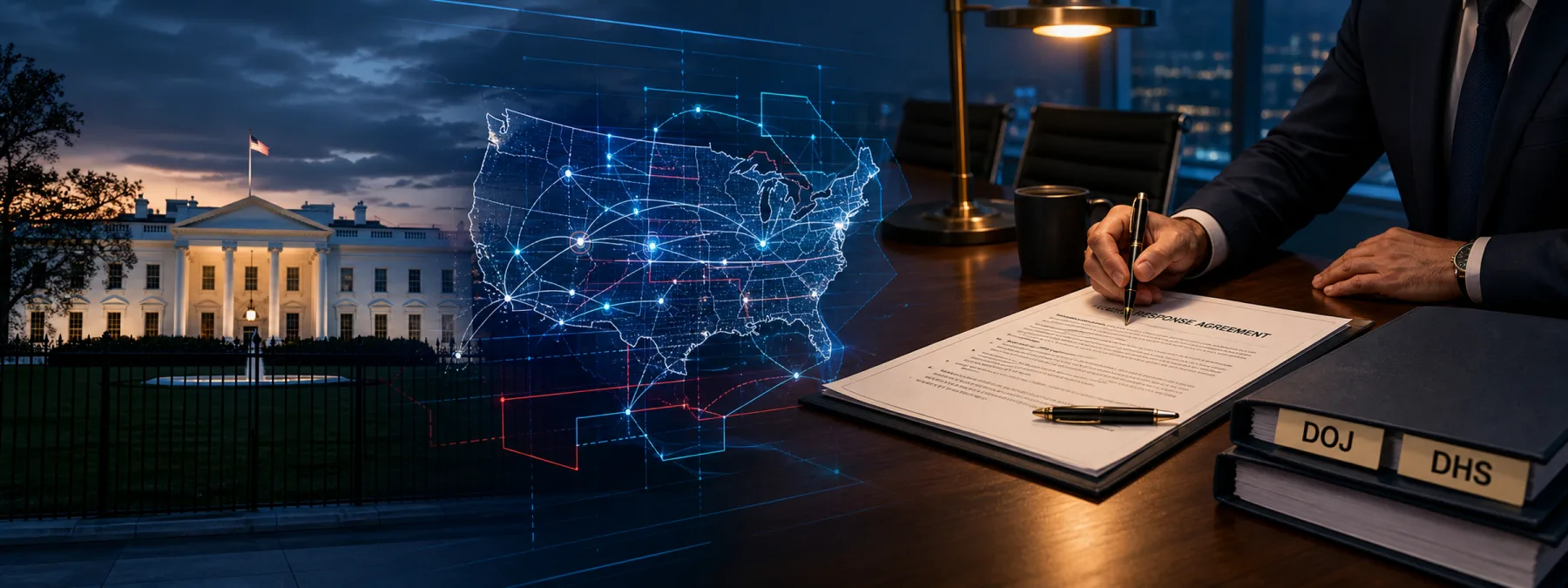
Cybersecurity Dive reported on August 13, 2026 that the U.S. government plans to let vetted private companies conduct certain cyber operations against foreign cyber-enabled criminal organizations under federal control. The story follows an August 12 White House memorandum directing the Department of Justice and Department of Homeland Security to create a program for approved private firms to perform cyber surveillance and cyber effects operations with written government oversight.
For most business owners, the immediate question is not whether their company will join that federal program. The practical issue is what happens when cybersecurity vendors, incident response firms, insurers, or consultants start using more aggressive language about disruption, countermeasures, or hack-back style work. Defensive containment is one thing. Independently striking back at systems beyond your company is something very different.
The business risk is in the gray area
The White House memorandum describes a controlled program with vetting, contracts, federal approval, DOJ and DHS oversight, reporting requirements, deconfliction, and possible bond or escrow requirements. That structure matters because it separates government-authorized operations from ordinary private incident response.
A New Jersey business dealing with ransomware, account takeover, wire fraud, or data theft may understandably want fast action. But urgency can make vague vendor promises sound attractive. If a provider says it can recover stolen data, disrupt an attacker, identify a criminal server, or take action outside your environment, the owner needs to know exactly what is being proposed, who has legal authority, and who carries the risk if the action goes wrong.
That does not mean businesses should be passive. It means the approval process should be documented before a crisis. Your company can authorize defensive steps inside systems you own or control: isolate devices, disable accounts, preserve logs, rotate credentials, block traffic, restore backups, and coordinate with law enforcement. The boundary gets more serious when the plan involves systems, accounts, infrastructure, or data outside your control.
What owners should ask vendors
Use this news as a reason to review incident response contract language before an emergency. The goal is not to turn every owner into a cyber lawyer. The goal is to avoid approving something during a stressful incident that nobody clearly understood.
- What actions are strictly defensive? Ask the provider to define which steps occur only inside your company's systems, cloud tenants, email accounts, endpoints, firewalls, backups, and vendor portals.
- What actions require executive or legal approval? Anything involving external infrastructure, attacker communication, third-party accounts, data retrieval, law-enforcement coordination, or extraordinary disruption should have a clear approval path.
- Who decides when law enforcement is contacted? Document whether the provider, owner, counsel, insurer, or internal leadership initiates FBI, Secret Service, local police, state cyber resources, or regulator contact.
- Does the contract prohibit independent hack-back activity? If the vendor uses language such as active defense, counterstrike, disruption, or cyber effects, ask for plain-language boundaries.
- What evidence will be preserved? Logs, images, tickets, communications, and chain-of-custody notes matter if an incident becomes an insurance, legal, regulatory, or customer-trust issue.
A practical next step
Owners do not need to rewrite every security contract today. Start with the documents that would matter during the first 48 hours of an incident: the managed IT agreement, incident response retainer, cyber insurance requirements, backup and disaster recovery plan, and executive escalation list.
Look for vague language around threat hunting, active defense, recovery, third-party coordination, and data retrieval. If the wording is unclear, ask the vendor to separate normal defensive work from anything requiring written approval or outside counsel. A simple incident response contract review can prevent confusion when the pressure is high.
The federal program may be aimed at major foreign criminal groups, but the lesson for smaller organizations is closer to home: know what your vendors are allowed to do, what they are not allowed to do, and who gets the final say before the response moves beyond your own environment.
Sources and further reading