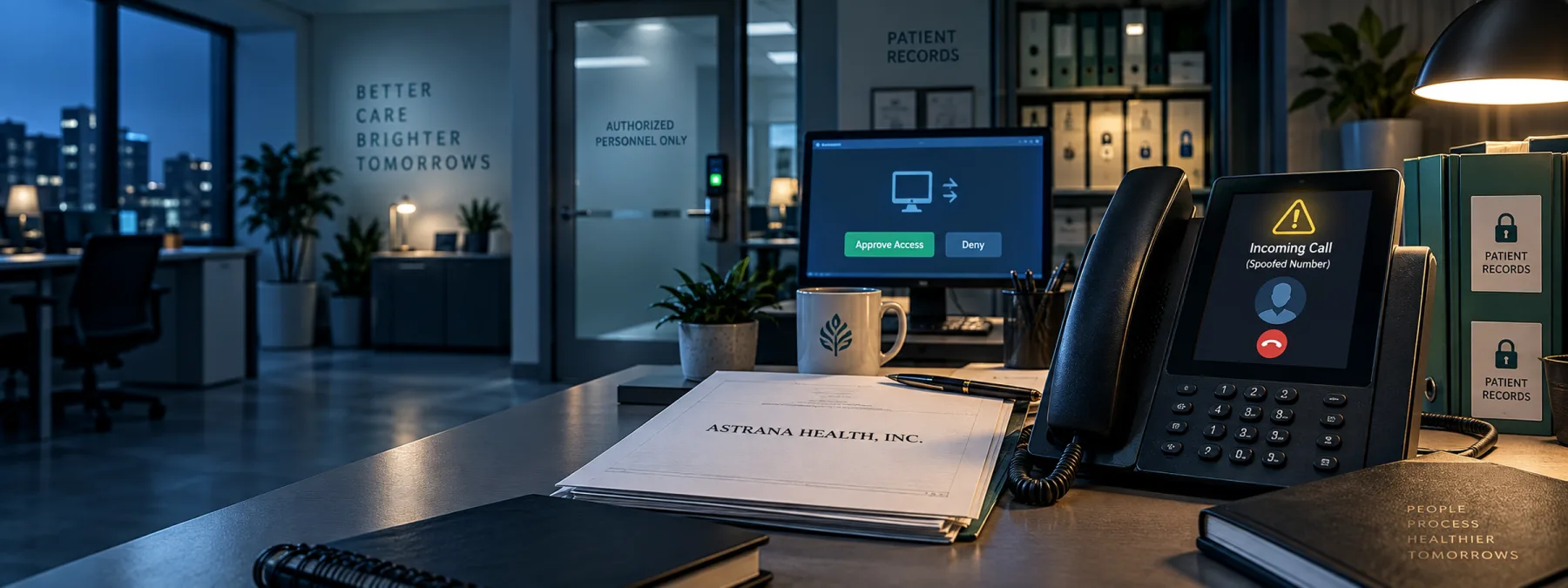
Astrana Health disclosed in a September 23, 2026 Form 8-K that a subsidiary detected unusual activity after social engineering attempts in which threat actors impersonated company personnel and spoofed the company's main corporate telephone number. According to the filing, the callers contacted certain employees in an effort to gain unauthorized access to company systems.
The company said it launched an investigation, engaged outside digital forensics support, notified law enforcement and regulators, reset affected credentials, restricted remote access tools, restored certain systems from clean backups, and enhanced monitoring, logging, and detection. Astrana also said certain private or confidential information on company servers may have been accessed or acquired without authorization, while the full scope remained under review.
Why this matters beyond one healthcare company
This is not only a story about one public company filing. It is a useful warning for healthcare practices, finance firms, nonprofits, schools, and professional offices that rely on phone calls, internal names, urgent support language, and remote-access tools to keep work moving.
Caller ID can look familiar. A caller can know employee names. A request can sound routine. That is exactly why a business needs a verification process that does not depend on the confidence of the person making the request. In small offices, trust moves quickly. Attackers know that, too.
The business decision is verification, not suspicion
The owner-level question is not whether every employee should distrust every call. That would grind normal operations to a halt. The better question is which requests require a second channel before anyone acts.
Requests for passwords, MFA codes, remote access, credential resets, payment changes, administrative approvals, patient data, employee records, or system recovery steps should trigger a known process. Staff should know when to pause, who to call back, and which phone number or ticket channel counts as trusted.
The filing also points to remote access as a practical review area. If a business allows vendors, internal IT, software support, or an MSP to connect remotely, the owner should know which tools are approved, who can launch them, how sessions are logged, and when emergency access expires. A remote support tool is helpful until it becomes the side door no one is watching.
Questions to ask your IT provider or internal team
- What requests require independent verification? Confirm the rule for passwords, MFA prompts, remote access, payment changes, and sensitive records.
- Which contact information is trusted? Staff should use a known directory, ticketing system, or published vendor contact, not a phone number supplied inside the request.
- Can caller ID be treated as proof? The answer should be no. Caller ID can support context, but it should not authorize access.
- Which remote access tools are allowed? Ask for the approved list, owner, logging method, and removal process for old or unused tools.
- How are affected credentials reset? Make sure resets include passwords, active sessions, tokens, recovery methods, and privileged accounts where appropriate.
- What evidence will the business receive after an incident? Owners should expect a plain-language timeline, containment steps, affected systems, open questions, and next actions.
A practical next step
Pick one workflow this week and test it: an employee receives a call from someone claiming to be IT support and asking for remote access. The exercise does not need to be dramatic. It should answer whether staff know how to verify the caller, where to document the request, who approves access, and when to escalate.
If the answer depends on memory, caller ID, or a familiar-sounding voice, the process needs work. The fix is not complicated, but it does need to be written down, trained, and reviewed with any vendor that can touch your systems.
Sources and further reading